Is fasting good for everyone?

Āyurveda

Is fasting good for everyone?

This spring, I paid particular attention to how many people choose to fast during this season. There are many reasons why people practice fasting, and countless books and articles on the topic, which sometimes makes it even harder to answer the question “Is fasting good for me?”. In this article, I explore the use of fasting in Āyurveda to shed some light on when and how to practice it safely.

Use of fasting according to Āyurveda

In Āyurveda, fasting is part of the langhana methods: practices designed to create lightness in the body and used when there is a dosha imbalance. In particular, fasting is considered especially effective in conditions such as type‑2 diabetes, adiposity, and skin diseases.

While in Western culture fasting is often associated with weight loss, in Āyurveda it is primarily about relieving the body of what burdens it on multiple levels. This includes:

  • Reducing excess of kapha dosha, which can manifest as heaviness or excess weight;

  • Reducing āma, the accumulated toxins resulting from poor digestion;

  • Addressing malfunctions of agni, the digestive fire that is responsible for overall health.

For this reason, fasting is considered an excellent first therapeutic step for many conditions, including something as common as fever. If you think about fever, it often comes with a natural loss of appetite, as the system needs rest before anything else.

Why seasonal fasting?

Because the primary scope of Āyurveda is to prevent illness before it arises, fasting can also be used as a powerful preventive method to keep the digestive fire (agni) stable during times of instability. One of the most delicate moments is the ritusandhi, the transition between two seasons. During these phases, the doshas naturally shift, making it more challenging for agni to remain balanced. A challenge that is even greater today due to the additional instability brought by climate change.

An especially suitable moment to practice fasting is the transition from winter to spring.

In spring, the body needs to eliminate the excess of kapha accumulated during winter. The heaviness typical of kapha during the cold months is not something strange or shameful, quite the opposite! It provides the grounding and stability needed to withstand the coldest time of the year. This is why, in winter, we naturally gravitate toward more nourishing foods and quieter activities.

As spring approaches, reducing the excess of kapha means reducing (not eliminating!) foods that share kapha-like qualities. Examples include: heavy, cold and oliy foods; dairy products; animal proteins; sticky and heavy cereals, such as rice and wheat; sugar, especially processed sugar; sweet, salty and sauer taste.

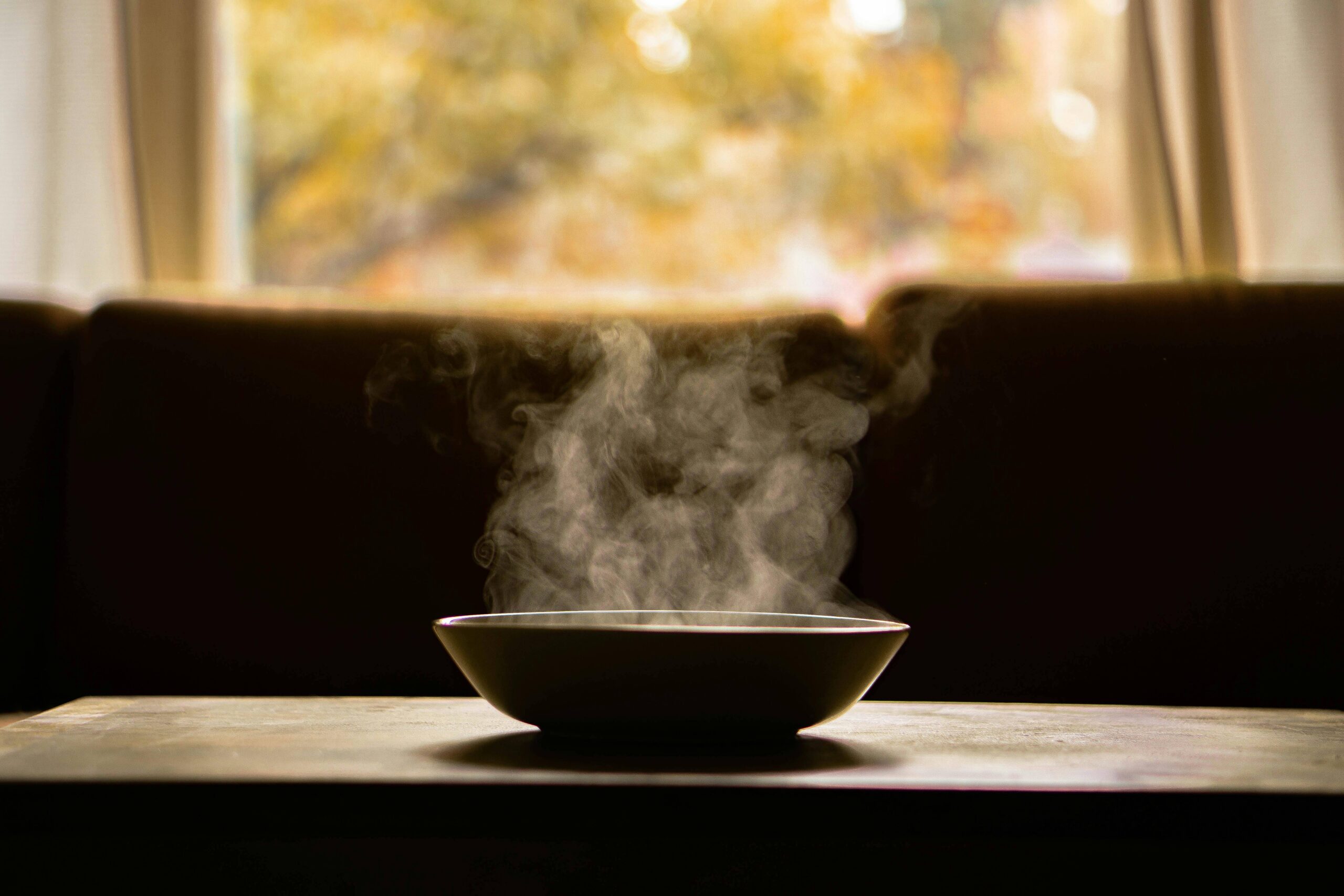
Warm soup steam
©Calvin

Quick reminder on the doshas and their qualities.

VATA: Air + Space
Responsible for movement, control, impulses and rhythm. It is dry, cold, light, subtle, unstable, clear and rough.
PITTA: Fire + Water
Responsible for heat, metabolism and colour. It is slightly oily, hot, fluid, piercing, sour, mobile and pungent.
KAPHA: Earth + Water
Provides physical mass, stability and cooling. It is heavy, cold, soft, oily, sweet, stable and sticky.

Dosha-specific recommendations

Every person is different, yet it is still possible to identify which constitutions benefit most from fasting.

🌀VATA: strict fasting increases vata qualities, which can quickly aggravate vata and lead to symptoms such as restlessness, bloating, constipation, or feeling ungrounded.

Recommended approach:

  • Avoid strict or prolonged fasting;

  • Prefer warm, light, nourishing broths or soups;

  • Include small amounts of healthy fats (like ghee) to stabilize the nervous system;

  • Keep meal timing regular.

Why: vata needs warmth, stability, and nourishment. Gentle fasting supports digestion without pushing the system into exhaustion.

🔥PITTA: fasting can be beneficial, but if done too aggressively it may increase heat, irritability, acidity, or inflammation.

Recommended approach:

  • Choose cooling, gentle fasting methods;

  • Avoid long dry fasts or skipping meals;

  • Stay hydrated with cooling herbal infusions (mint, coriander, fennel).

Why: pitta needs cooling and moderation. Gentle fasting helps clear heat and supports liver function.

🪵KAPHA generally tolerates fasting the best and often benefits from it the most, especially when there is congestion, lethargy, or weight gain.

Recommended approach:

  • Kapha can handle more intense fasting methods;

  • Favor warming spices (ginger, black pepper, tumeric) to stimulate agni;

  • Reduce sweet, heavy, oily foods during fasting periods.

Why: kapha needs lightness, warmth, and stimulation. Fasting helps clear stagnation, reduce excess weight, and restore metabolic activity

Safe fasting you can try now

At this point you might be wondering: so, how do I actually fast? From the āyurvedic perspective, the following recommendations offer a safe and approach that works well for all doshas:

  • Observe your hunger and eat only where there is a clear signal of hunger. This can be surprisingly challenging if you are used to snacking between meals or eating emotionally. Often, fasting begins with re‑learning how to listen to your body’s signals in a world where the mind is constantly distracted.
  • Eat at least 3 hours before going to sleep. This gives your body enough time to digest the meal so that sleep can be used for restoration, not digestion.
  • Have a half portion for dinner. This is harder than it sounds, as many people are accustomed to eating until they feel completely full. A light and warm vegetable soup is also a good dinner option.
  • Have a “kitchari day” once a week. Kitchari is a classic recipe that is used to reduce āma, the undigested metabolic waste, and restore the digestive fire. Its main ingredients are mung dal, basmati rice and a good mix of spices that support digestion.

How do I know it's working?

When fasting is done correctly and in the right measure for you, these are the signs it’s working:

  • Regular and healthy elimination of stool, urine, and intestinal gas;

  • A sense of lightness in the body and chest;

  • Effortless, odourless belching;

  • A clean oral cavity;

  • Disappearance of fatigue;

  • Unobstructed sweating;

  • Natural appetite and thirst;

  • An overall feeling of wellbeing and contentment.

Contraindications

The instructions provided in this article don’t have any contraindications and are suitbale for all doshas. However, if you wish to try more intense forms of fasting, you should first consult your doctor, as the following contraindications must be taken into account. Fasting is not suitable if:

  • You are underweight;
  • You currently suffer from, or have a history of, eating disorders;

  • You are pregnant or are breastfeeding;
  • You are a child or teenager;
  • You have an excess of vata dosha.
Note: For women, the ideal moment in the menstrual cycle to practice fasting is the first half, as it is more kapha-dominant (meaning there is more stability). This is especially important to keep in mind if you are considering more intense types of fasting.

How to use fasting in conclusion

To conclude, fasting can be used as a therapeutic tool for many conditions in which the system needs to be unburdened. It also holds great value as a preventive practice, especially during seasonal transitions such as the shift from winter to spring. 

When practiced according to the simple principles described in this article, fasting can be accessible to everyone. However, if you wish to explore more intense forms of fasting, it is essential to consult both your doctor and an Āyurvedic nutrition counselor. This ensures that your unique constitution, potential imbalances, and current phase of life are taken into consideration.

Please note: all the content produced for this blog is entirely human-made and has not been originated with the use of AI. To improve readability, the diacritical marks typically used in transliterated Sanskrit have been omitted.

Leave your thought here

Your email address will not be published. Required fields are marked *