
Is Yoga enough as a “workout”?
 Maddalena
 Many Yogis out there probably cringe when they see the words “Yoga” and “workout” in the same sentence and, honestly, I feel the same way. Still, I’m often asked whether a regular Yoga practice is enough to stay fit. But so many people ask me about whether a regular Yoga practice is enough to stay fit. As in my previous article, the short answer is no, but let’s take a closer ook at why.
What is Yoga?
Yoga involves moving your body. During a practice, you might sweat, feel your heart rate rise, and even notice sore muscles the next day. Afterward, you often feel energized, and with regular practice you’ll experience physical benefits such as greater flexibility, increased strength, and improved balance. However, Yoga is not a sport.
Through the physical postures, the asanas, the body becomes steady and comfortable enough to sit in stillness. Because we tend to identify strongly with our physical form, the body is the natural starting point for the journey inward. In this sense, the body is a vehicle, not the destination. And the destination is not some improved version of ourselves that exists somewhere outside of us. Rather, it is a return to our own depths, to the inner goodness and freedom that are our true nature and have always been there. We have simply forgotten them.

The fact that physical performance is not the central focus of Yoga becomes even clearer when we look at Patanjali’s definition in the Yoga Sutras. This foundational text, written around 2,000 years ago, does not describe how Yoga should look from the outside, but rather how it should feel from within. Patanjali defines Yoga as the stilling of the fluctuations of the mind (yogah citta vrtti nirodhah). In other words, the essence of Yoga lies not in perfecting postures or achieving physical feats, but in cultivating inner steadiness, awareness, and mental clarity.
What are the differences between Yoga and Sport?
Another way to understand the difference between Yoga and a workout is by looking at how the practice of asanas differs from any sport. Below is a list of distinctions — not to imply that one is better than the other, but simply to acknowledge that they serve different purposes.
The Idea of Performance
- The goal: Yoga’s goal is to free the mind from its patterns and create a deeper connection between body and mind. It is a journey that begins in the body but ultimately aims at something far beyond it. Sports, on the other hand, have concrete, measurable objectives that focus on what the body can do, e.g. lifting 100 kg, running a half marathon, or strengthening your core muscles.
- The performance: Yoga is not performative. It is free from judgment and does not involve scoring or competition. That said, the encounter between Western culture and Yoga has created certain stereotypes about what a “good Yogi” should be and look like. Someone once asked me, “So, can you do a headstand?” And while I understand the excitement and acrobatic appeal of some asanas, what your body can or cannot do does not define the quality of your practice. An “advanced” Yogi is someone who can stay present and aware throughout their practice.
Sports, in contrast, typically measure performance and assign scores, times, or rankings.
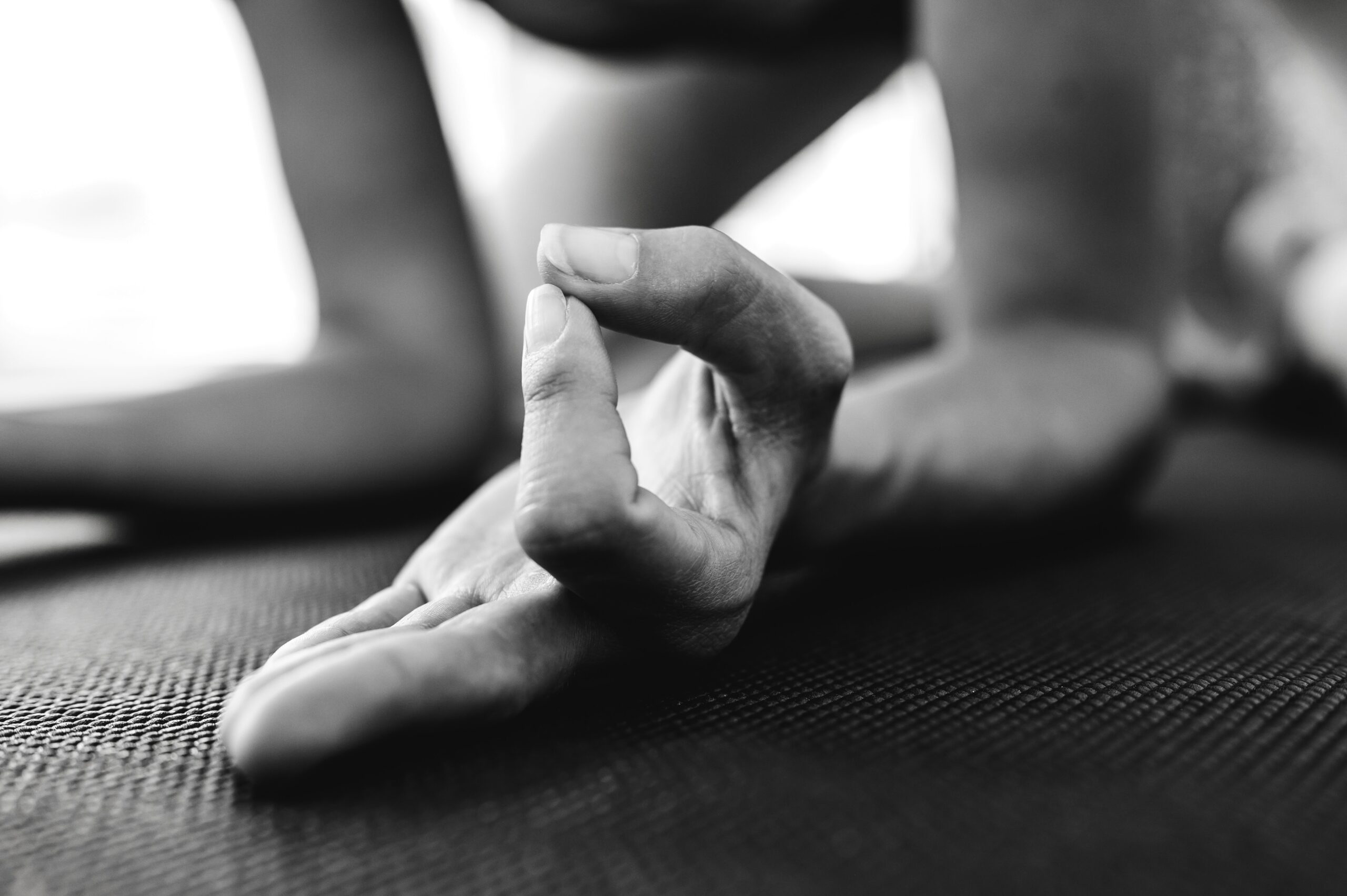
Most people practice hatha yoga not for its philosophy but for its physical benefits. Their attention is limited to the outer container rather than the inner content of personality. In actual history, however, the hatha excercises were developed within the framework of Ashtanga yoga, the Yoga of the Eight Limbs, and were meant to train the disciple for higher, deeper, spiritual disciplines.
Swami Veda Bharati, “Philosophy of Hatha Yoga”
The Value of Presence
- The moment: In Yoga, the here and now are essential. There is nothing to chase, nothing to achieve, and nothing from the past to hold on to. The practice is about staying present in your body and its sensations as you move through the asanas. I wouldn’t say that sports are the opposite, but they do tend to emphasize the final result of your performance and how you can improve it.
- The breath: In Yoga, breath control plays a central role. The practice of consciously guiding the breath even has its own name: pranayama. While you can certainly apply pranayama techniques in sports, the breath usually plays a more functional and less central role. Another difference is that in Yoga you inhale and exhale through the nose, whereas in most sports you naturally exhale through the mouth.
- Your limits: One of the challenges in Yoga is learning to recognize and respect your limits. Because we live in a performance‑driven world, it’s easy to become stubborn and push yourself into an asana that doesn’t feel right on a particular day. When there is contraction, the response should be relaxation. Sports, on the other hand, often encourage competition and the pursuit of ever‑higher goals.
Why is Yoga not enough to stay fit?
If we now focus purely on the physical aspect, practicing Yoga certainly brings many benefits to your body: it can stabilize your deep core muscles, increase flexibility, build functional strength and improve digestion. With regular practice, you will notice your body changing: becoming more mobile, more balanced, and in many cases stronger (depending on the Yoga style). These are wonderful effects.
However, Yoga still works primarily with your own body weight, and that stimulus is limited. Especially if you spend many hours sitting each day, your body weight alone is often not enough to counterbalance the postural strain and muscular imbalances that develop over time. This is where targeted strength training becomes essential. Strength training provides progressive overload, something Yoga does not, and this is crucial for building muscle, supporting your joints, and maintaining long‑term physical health. In fact, combining Yoga with strength training is often the most effective approach.
This distinction matters because if your muscles are not strong enough to protect your joints, Yoga can sometimes do more harm than good — something I’ve experienced in my own body as well.
As one of my teachers once said: “Flexibility without strength is not healthy, and strength without flexibility is not healthy either.”
Please note: all the content produced for this blog is entirely human-made and has not been originated with the use of AI. To improve readability, the diacritical marks typically used in transliterated Sanskrit have been omitted.