Are Āyurvedic Nutrition and Intuitive Eating the same thing?

Āyurveda

Are Āyurvedic Nutrition and Intuitive Eating the same thing?

During my Āyurveda studies, I once asked my teacher if Āyurvedic Nutrition and Intuitive Eating are in some measure the same thing. The short answer is no, but there are differences and similarities that are worth exploring.

What is Āyurvedic Nutrition?

Āyurvedic Nutrition is eating according to your individual constitution (dosha), age, lifestyle and in harmony with the seasons. It is an individual approach rooted in Āyurveda, India’s traditional health system.

Like plants, we don’t all need the same amount of water and light, nor the same type of soil. What supports a vata constitution won’t necessarily benefit a kapha or pitta, and vice versa. The nourishment your body needs in childhood differs from what it requires in adulthood or old age. Similarly, an athlete will eat differently from someone who spends most of the day at a computer. And food that feels grounding and comforting in winter may not feel the same in summer. This highlights a key principle that Āyurveda honors: we are all different. This is why there is no such thing as the ultimate diet that works for everyone. 

Where Nourishment becomes Transformation

Another way to define Āyurvedic Nutrition is also eating according to your digestive fire, agni. This means choosing food according to your body’s capacity to digest it. Agni is a central concept in Āyurveda and its responsibilities go way beyond digestion.

Lifespan, skintone, strength, health, enthusiasm, body dimensions, charisma, immunity, energy, heat processes and prāna – all of them depend on agni, the fire.
One dies when this fire goes out, lives long free from illness when it functions properly, becomes ill when it is disturbed; therefore, 
agni is the root of everything.

                                                      Ca. Sa. Ci. 15: 3 – 4

Fire flame in the night
@joshuanewton

This powerful quotation from the Caraka Samitha, one of the Great Three Classics of Āyurveda, beautifully defines the digestive fire that you can imagine as a flame located between the end of the stomach and the beginning of the small intestine (duodenum). This fire should keep burning at a constant rate, not too weak, not too strong. 

What happens if that’s not the case?
  • When agni burns well, you are able to feel a clear sense of hunger, digest and absorb food properly, and regularly eliminate the waste products. You feel energetic, you sleep well and have a clear mind.
  • When agni doesn’t burn well, depending on its form of dysfunction, your sense of hunger will be either too weak, too strong or intermittent and so will be your digestion. The consequence of this dysfunction is an uncompleted digestion. What you eat stays in the body as “undigested”, thus producing toxins (āma) that can cause sickness. 

Even though we are now referring to food, remember that agni doesn’t just operate at a physical level but also at an emotional one. This means that also undigested emotions can cause a disease. 

To sum up what Āyurvedic Nutrition says: Your food choices can either support or undermine your health. To make good choices you need to take into account your individual constitution, life stage, agni-strengh and season of the year. And, last but not least, what feels good to your senses.

A (humble) definition of Intuitive Eating

I am not an expert of Intuitive Eating, but here is a broad definition of it, based on what I have read in the internet: Intuitive eating is a self-care approach to eating that aims to help people reconnect with their body’s natural signals of hunger, fullness, and satisfaction. This method was created in the 90s of the last century by dietitians Evelyn Tribole and Elyse Resch. Tribole and Resch wanted to respond to the restrictive and controlling mindset of diet culture and fat-phobia. For this reason their method does not focus on specific foods, calorie counts, or eating plans. Its focus is on rebuilding the connection between body and mind and freeing people from eating-related guilt.

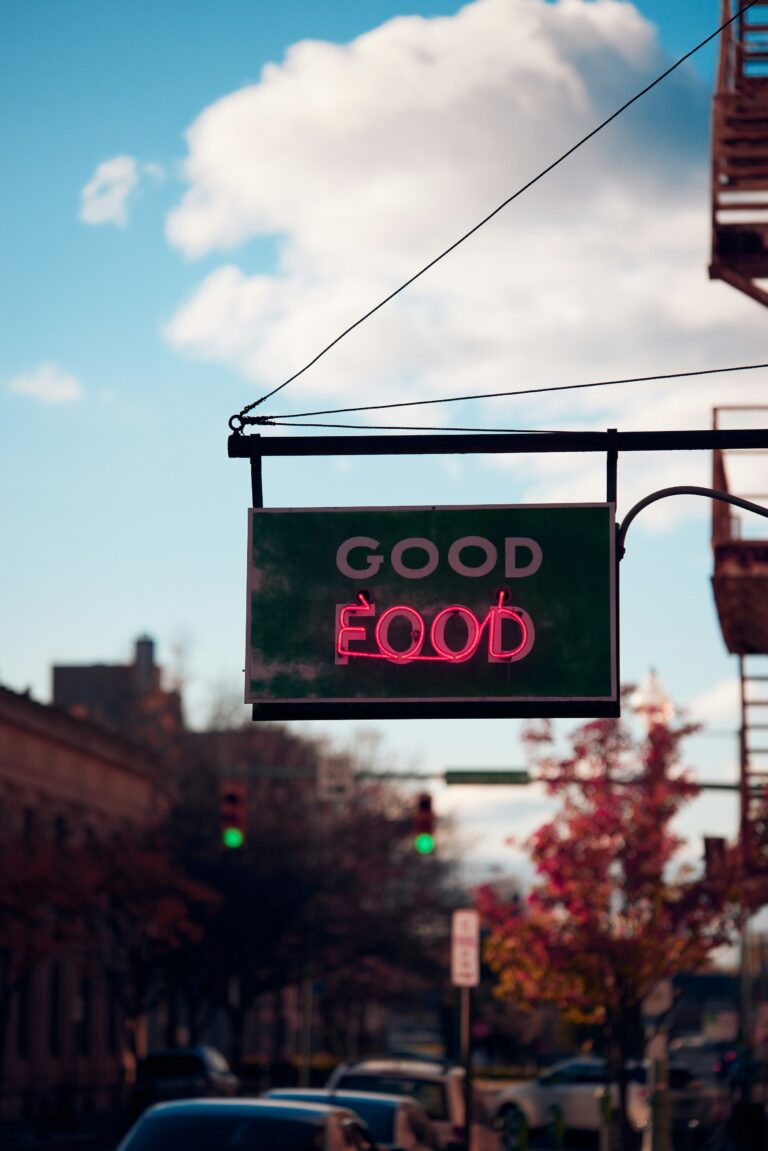
Neon "Good Food" sign on a street
@abject

Similarities between Āyurvedic Nutrition and Intuitive Eating

    I asked my teacher this question because the two approaches share some important similarities. For example:
  • Mind-body Connection: Both Āyurveda and Intuitive Eating share the importance of connection between body and mind. (In Āyurveda the elements of connection are actually more: body, senses, mind and soul). This connection is fundamentally what allows you to sense hunger and fullness, as well as appetite or aversion toward certain foods. It allows you to answer to your needs. In Āyurveda, ignoring or suppressing the body’s needs aggravates the vata dosha and may contribute to the development of disease. In Intuitive Eating your feelings and bodily sensations are taken as valid signals that help you reconnect with your needs them.
  • It’s a process: Intuitive Eating is often described as a process because awakening intuition takes time. Āyurveda, which permeates every aspect of life, can also be understood as a process. It is about losing and regaining balance, and learning to flow with life and its changes. It takes patience to understand and honor your body and its rhythms. Many times I believed I had finally grasped everything about my dosha, only to realize soon after that there was still more to discover. In the end, it is a lifelong journey.
@Alex Andrews

So why is Āyurvedic Nutrition still different from Intuitive Eating?

Despite the aspects that Āyurvedic Nutrition and Intuitive Eating have in common — and that misled me in the beginning — there are definitely a few key points that I want to share to get to the core of their differences.

  • Definition: Āyurvedic Nutrition and Intuitive Eating come from very different foundations. Āyurveda is India’s traditional medical system while Intuitive Eating is a modern psychology-based framework.
  • Social Context: Āyurveda was born thousands of years before to preserve health and heal diseases. Intuitive Eating was born as a response to societal issues related to body image.
  • Focus: Āyurveda puts great emphasis on the digestive system. Intuitive Eating focuses on internal signals. 
  • Goal: Āyurveda’s goal is to preserve health and extend the lifespan. Intuitive Eating aims to set people free from diet culture and heal their relationship with food.
  • Guidelines: Āyurveda is not about rigid rules, however there are clear guidelines on food choices, food combinations, cooking methods and the use of spices. Intuitive Eating encourages eating what feels right in the moment, without judgment.
  • Intuition (the most crucial point!): According to Āyurveda intuition becomes reliable only when your digestive fire (agni) is balanced and the senses are clear. Intuitive Eating assumes your body’s signals are always trustworthy.
In Conclusion

Āyurvedic Nutrition and Intuitive Eating are not the same. As my teacher explained at the time, intuition alone is sometimes not enough.

Because this was a question I had been asking myself, I wanted to share these reflections and shed some light on the topic. Perhaps you’ve wondered about it too. In my experience, combining both approaches can be quite effective, as they intersect in meaningful ways, even though their aims differ from each other. And since I work with food, any approach that helps dismantle the constraints of diet culture feels especially valuable to me. 

For more information about Intuitive Eating, I invite you to check out this article written by an expert (in Italian).

Please note: all the content produced for this blog is entirely human-made and has not been originated with the use of AI. To improve readability, the diacritical marks typically used in transliterated Sanskrit have been omitted.

Leave your thought here

Your email address will not be published. Required fields are marked *